
Nail Cancer Treatment
Although nail cancer is uncommon, early diagnosis is critical because it can closely resemble more common nail conditions such as fungal infections, warts, trauma, or chronic nail inflammation. Delayed diagnosis may allow the cancer to progress, making treatment more extensive. Through a virtual nail consultation, Dr. Dana Stern can evaluate suspicious nail changes, determine whether additional testing or biopsy is needed, and develop an individualized plan for diagnosis and treatment.
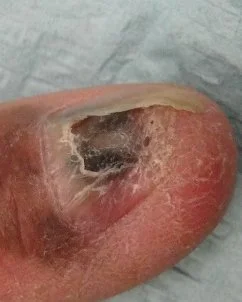
What Is Nail Cancer?
Nail cancer refers to malignant tumors that develop within or around the nail unit. Although these cancers are relatively uncommon, they are frequently mistaken for more benign conditions such as nail fungus, chronic infections, trauma, warts, or inflammatory nail disorders. As a result, diagnosis is often delayed. The most serious cancers affecting the nail unit include squamous cell carcinoma and subungual melanoma, although other benign and malignant tumors may also occur. These cancers can involve either the fingernails or toenails and may affect the nail plate, nail bed, nail matrix, or surrounding skin.
What Causes Nail Cancer?
The exact cause of nail cancer is not always known, and many patients have no obvious risk factors. However, certain factors are associated with an increased risk of developing cancers of the nail unit.
Common risk factors include:
Increasing age
Darker skin type (higher risk of melanoma on the palms, soles and nails)
Human papillomavirus (HPV) infection, especially in squamous cell carcinoma
A personal history of skin cancer
A history of nail trauma or longstanding inflammation of the nail
Suppressed immune system
Family or personal history of melanoma
Signs & Symptoms of Nail Cancer
If you’re experiencing any of the following nail changes, an evaluation may be warranted.
A dark brown or black streak or a widening or changing pigmented band
Pigment extending onto the surrounding skin (Hutchinson sign)
A non-healing sore or ulcer around the nail
Persistent bleeding beneath or around the nail
A painful or enlarging mass beneath the nail
Nail lifting or destruction without an obvious cause in a single nail
Persistent drainage from the nail
Persistent thickening or distortion of a single nail
A wart-like growth that does not respond to treatment
Recurrent infection involving the same nail
Nail changes that persist despite treatment for fungus or trauma
View Our Real Patients Results
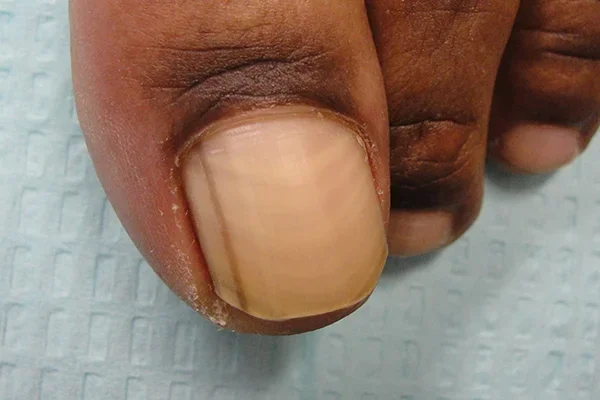
Pre-treatment
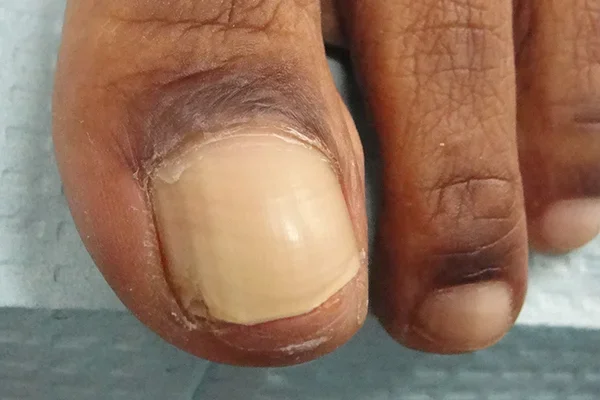
Post-treatment
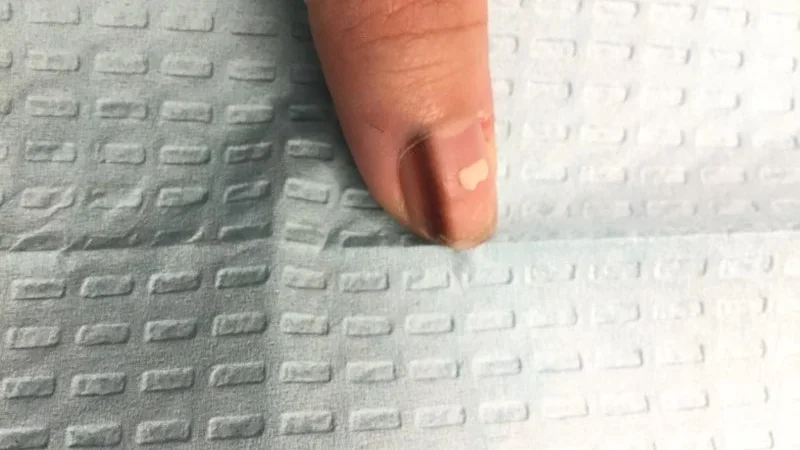
Pre-treatment
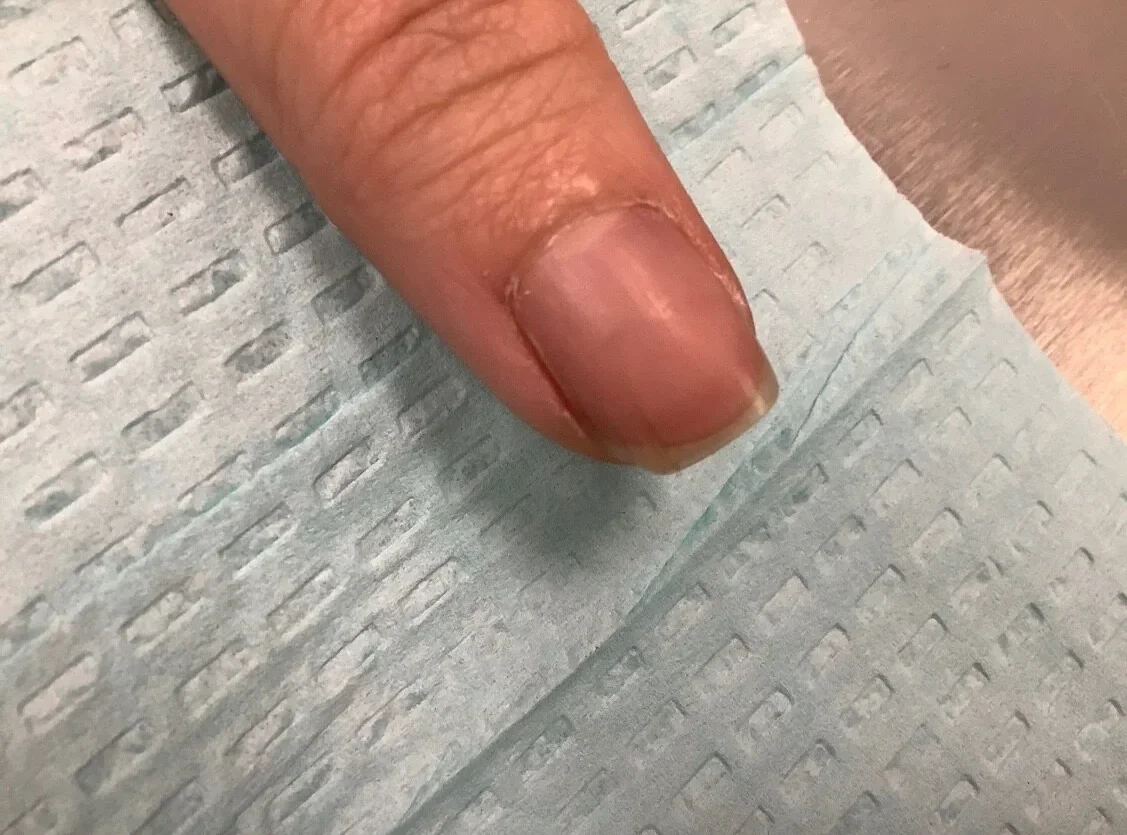
Post-treatment
How Dr. Stern Evaluates Nail Cancer Virtually
It is important to note that for both asynchronous e-visits and live video consults, Dr. Stern cannot accurately diagnose pigmented bands of the nail virtually. She prefers to evaluate pigmented bands (brown or black stripes in the nail) in-person. If you have a pigmented band, through a live video consult, she is happy to discuss your treatment strategy and to refer you to a nearby qualified dermatologist. She will not be able to tell you if a pigmented band needs a biopsy from a virtual visit.
For both asynchronous e-visit and live video consults, Dr. Dana Stern will review your photos and intake forms, prior treatments and your current medications and health history. For asynchronous e-visits, you will receive a detailed treatment plan to share with your local healthcare provider, including recommendations for imaging, procedures, or additional evaluation when needed. During live video consultations, Dr. Stern can prescribe medications when appropriate, coordinate laboratory testing if appropriate, and recommend local procedures such as nail biopsy when indicated.
Nail Cancer Treatment Options
Treatment depends on the type of nail cancer, its size and location, whether it has spread, and the results of any biopsy. The most important step is obtaining an accurate diagnosis as early as possible. When detected early, many nail cancers can be successfully treated while preserving both function and appearance.
Possible treatment approach:
Nail biopsy to establish the diagnosis
Referral for surgical removal when indicated
Mohs micrographic surgery for selected tumors
Coordination with dermatologic surgery or hand surgery specialists
Additional imaging or testing when appropriate
Ongoing monitoring for recurrence
Local wound care recommendations following treatment

About Dr. Stern
Dr. Dana Stern is a board-certified dermatologist with more than 20 years of experience treating nail disorders. Her practice is devoted exclusively to nail health, and she is a nationally recognized expert, published author, and frequent speaker on nail disease. Recognized by Castle Connolly and Super Doctors and regularly featured in the media, Dr. Stern provides convenient, expert care through her specialized virtual nail consultation practice.
Start Your Virtual Nail Consultation
If you have a persistent nail change, dark streak, non-healing growth, bleeding, drainage, or a nail condition that has not responded to treatment, don’t ignore it. Dr. Stern can help determine whether your nail changes require further evaluation, biopsy, or referral for treatment. Through a secure virtual consultation, you’ll receive an expert assessment and a personalized plan for the next steps in your care.
New Patients
For patients who would like to begin care with Dr. Stern through a virtual nail consultation.
Current Patients
For established patients who need a follow up visit, medication review, treatment update, or ongoing nail care guidance.
Nail Cancer FAQ
-
While a virtual consultation is often an excellent first step, Dr. Stern cannot accurately diagnose pigmented bands of the nail virtually. Dr. Stern can evaluate your photographs, review your history, and determine whether your nail changes are suspicious enough to require an in-person examination or nail biopsy. Through a live video consult, she will refer you to a nearby qualified dermatologist for further in person evaluation. While a biopsy is necessary to definitively diagnose nail cancer, a virtual consultation can help ensure that suspicious lesions are recognized promptly.
-
No. Most dark bands in the nail are benign. A new dark band in a single nail should always be evaluated.
-
Yes although melanoma can occur on many body parts including the nails, skin, eye, palms, soles, and certain mucosal areas such as the genitals.
-
Any new dark band in a single nail should be evaluated. If you have multiple bands on multiple nails and one is changing, very dark or there is pigment on the skin, an evaluation is imperative.
-
It depends on the case and the surgeon but typically either a matrix shave biopsy or a punch biopsy.
-
Yes. Nail cancer is frequently mistaken for nail fungus, chronic infection, trauma, warts, or inflammatory nail disorders. Persistent nail changes that fail to improve with appropriate treatment should always be re-evaluated.
-
If Dr. Stern suspects a nail tumor based on your history and photographs, she may recommend a nail biopsy. A biopsy is the only way to definitively diagnose nail cancer and determine the most appropriate treatment. Through a live video consult, she will refer you to a nearby qualified dermatologist for further in person evaluation.
-
Yes. Nail lichen planus is frequently confused with nail psoriasis, nail fungus, brittle nails, and other inflammatory nail disorders. Because treatment differs significantly among these conditions, establishing the correct diagnosis is essential.
-
Many nail cancers can be successfully treated when they are diagnosed early. Prompt evaluation and treatment generally result in the best outcomes and may allow for less extensive surgery.
-
You will receive links to either your email or text that contain our demographic form, consent form, nail questionnaire and photo upload instructions. Our staff is always available to help should you have any questions or issues.