
Periungual Warts & Subungual Warts
Warts around or beneath the nail can be painful, difficult to treat, and may permanently damage the nail if left untreated. Because nail warts often resemble other nail conditions including fungal infections, benign tumors, and even nail cancer, an accurate diagnosis by a nail expert is essential. Through a virtual nail consultation, Dr. Dana Stern can identify the cause of your nail changes and develop a personalized treatment plan or coordinate local treatment when appropriate.
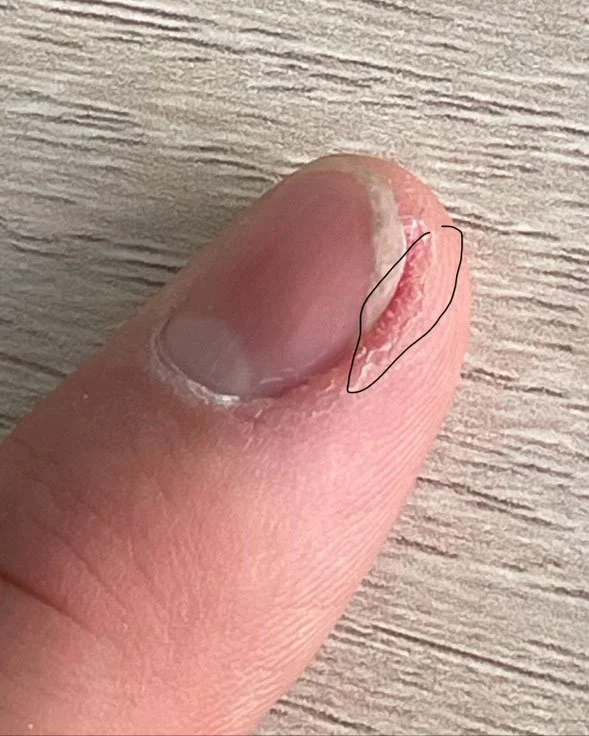
What Are Periungual and Subungual Warts?
Warts of the nail, also called periungual (around the nail) or subungual (beneath the nail) warts, are benign growths caused by infection with the human papillomavirus (HPV). They commonly develop around the cuticle, nail folds, or beneath the nail plate and can interfere with normal nail growth. Unlike warts on other areas of the body, nail warts are often more difficult to treat because of their location. As they enlarge, they may distort the nail, cause pain, damage the nail matrix, or spread to nearby fingers.
What Causes Nail Warts?
Nail warts are caused by infection with certain strains of the human papillomavirus (HPV). The virus enters through tiny breaks in the skin around the nail and stimulates the growth of excess skin cells, resulting in a wart. Because the skin around the nails is easily traumatized, periungual warts are particularly common in people who bite their nails or frequently manipulate their cuticles. Other risk factors include frequent manicures or cuticle trauma, chronic skin irritation, weakened immune system and direct contact with HPV. Because nail warts can transform into squamous cell carcinoma, expert evaluation of nail warts is imperative.
What Are The Symptoms of Periungual and Subungual Warts?
Nail warts often develop gradually and may become painful or interfere with nail growth over time. If you’re experiencing any of the following nail changes, an evaluation may be warranted.
A rough, raised growth around the nail or a wart beneath the nail plate
Thickening or distortion of the nail
Splitting or lifting of the nail
Pain when pressure is applied to the nail
Bleeding from the lesion
Interrupted cuticle growth
Multiple warts around the fingers
A wart that has not responded to over-the-counter treatment
A persistent growth affecting a single nail
How Dr. Stern Evaluates Nail Warts Virtually
For both asynchronous e-visits and live video consultations, Dr. Stern carefully reviews your nail photographs, medical history, symptoms, and the timeline of your nail changes. She evaluates the location, color, shape, and growth pattern of the lesion to determine the most likely diagnosis. For asynchronous e-visits, you will receive a detailed assessment and recommendations that can be shared with your local dermatologist, hand surgeon, or podiatrist if additional imaging, biopsy, or surgical treatment is recommended. For live video consultations, Dr. Stern can discuss your findings in real time, answer your questions, coordinate any necessary testing, and guide you toward the most appropriate next step in your care.
Nail Wart Treatment Options
Treatment depends on the size, location, duration, and number of warts involved. Because periungual and subungual warts are often more resistant to treatment than warts elsewhere on the body, multiple treatments may be necessary.
Possible treatment approach:
Prescription topical medications
Salicylic acid therapy
Cryotherapy (freezing)
Immunotherapy
Surgical removal when appropriate
Laser treatment in selected cases
Recommendations to prevent spreading the virus
Monitoring for recurrence
Local care coordination when procedures are needed
Find A More Effective Approach To Nail Warts
If your wart has persisted despite over-the-counter products, freezing treatments, prescription medications, or repeated procedures, Dr. Stern will carefully review your diagnosis and previous treatments to determine why it has not responded.
In some cases, the lesion may not actually be a wart. Nail tumors, squamous cell carcinoma, pyogenic granulomas, and other nail disorders can closely resemble periungual warts. Dr. Stern will determine whether additional evaluation, biopsy, or referral is appropriate.

About Dr. Stern
Dr. Dana Stern is a board-certified dermatologist with more than 20 years of experience treating nail disorders. Her practice is devoted exclusively to nail health, and she is a nationally recognized expert, published author, and frequent speaker on nail disease. Recognized by Castle Connolly and Super Doctors and regularly featured in the media, Dr. Stern provides convenient, expert care through her specialized virtual nail consultation practice.
Start Your Virtual Nail Consultation
Whether you’ve developed a new wart around the nail or have a lesion that has not responded to treatment, Dr. Stern can help determine the diagnosis and recommend the most appropriate next steps.
New Patients
For patients who would like to begin care with Dr. Stern through a virtual nail consultation.
Current Patients
For established patients who need a follow up visit, medication review, treatment update, or ongoing nail care guidance.
Nail Wart FAQ
-
Yes. In many cases, Dr. Stern can diagnose nail warts by reviewing your medical history and high-quality photographs. If additional testing or biopsy is needed, she will explain the next steps.
-
Yes. Through a live video consultation, Dr. Stern can prescribe medications when appropriate. If you choose an asynchronous e-visit, she will provide a personalized treatment plan that can be shared with your local healthcare provider.
-
Yes a wart under the nail is a subungual wart and tends to be more challenging to treat.
-
Yes, a wart is a growth that can damage the cuticle as it grows.
-
Yes, warts can cause the nail to become thick and discolored, often mimicking other conditions including nail fungus.
-
Not necessarily, it depends on the treatment.
-
Nail warts are due to a virus called HPV. Viruses can be challenging to treat. You may have certain risk factors that need to be addressed or your previous treatment plan may need to be altered.
-
Yes. Nail warts are caused by HPV and can spread to other fingers, other areas of your body, or occasionally to other people through direct contact.
-
Periungual and subungual warts are often more resistant to treatment because of their location. In some cases, the diagnosis may also be incorrect, and another nail disorder may be present.
-
Yes. Large or longstanding warts can damage the nail matrix and lead to permanent nail deformity, particularly if left untreated.
-
Absolutely. Nail warts can resemble fungal infections, pyogenic granulomas, benign nail tumors, squamous cell carcinoma, and other nail disorders. Persistent or unusual growths should always be evaluated by a nail expert.
-
You will receive links to either your email or text that contain our demographic form, consent form, nail questionnaire and photo upload instructions. Our staff is always available to help should you have any questions or issues.