
Salon & Nail Product Induced Nail Issues
Salon services and cosmetic nail products can improve the appearance of your nails, but they can also lead to damage, allergic reactions, infections, and long-lasting changes to the nail. Because many salon-related nail problems closely resemble fungal infections or other nail diseases, an accurate diagnosis by a nail expert is essential. Through a virtual consultation, Dr. Dana Stern can determine whether your nail changes are related to cosmetic procedures, nail products, or an underlying nail disorder, and develop an individualized treatment plan tailored to your specific situation.
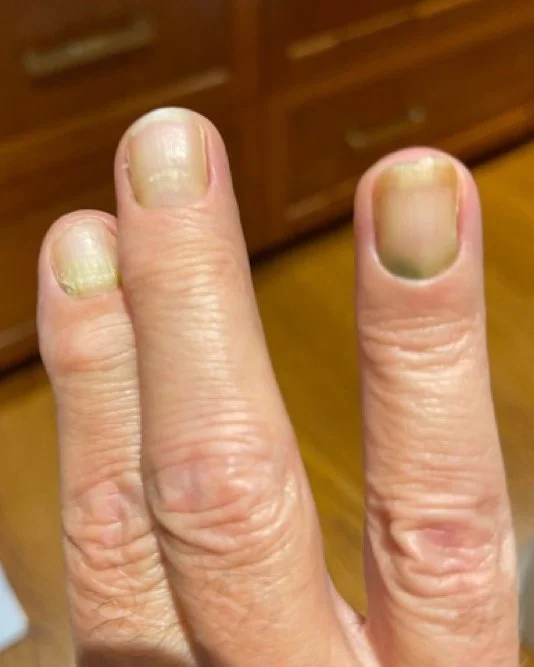
Nail Damaged Caused by Manicures and Nail Products
Professional manicures and pedicures are generally safe, but exposure to certain nail products can damage the nail plate, nail bed, cuticle, or surrounding skin. Problems may develop after a single treatment or gradually over months or years of repeated exposure. Common causes include gel polish, acrylic nails, dip powder manicures, press-on nails, nail adhesives, aggressive filing or buffing, electric nail drills, cuticle manipulation, cleaning under the nail with an orange stick or metal tool, and allergic reactions to ingredients found in nail products. In some cases, salon procedures may increase the risk of bacterial or fungal infections by disrupting the natural protective barrier of the nail.
What Causes Salon & Product Induced Nail Issues?
Common causes and risk factors include:
Repeated gel polish application and improper gel removal
Acrylic, dip powder or press-on nails and prolonged artificial nail wear
Over-filing, buffing, or aggressive drilling of the nail plate
Electric nail drill (e-file) trauma
Frequent acetone exposure
Aggressive cuticle trimming or manipulation
Allergic reactions to nail products, including acrylates and adhesives
Moisture trapped beneath artificial nails leading to infection
Repeated nail trauma from cosmetic procedures
Underlying nail conditions that become aggravated by salon treatments
Erroneous application of product
Common Signs of Salon Related Nail Damaged
If you’re experiencing any of the following nail changes, an evaluation may be warranted.
Nail thinning, weakening, peeling or splitting nails (brittle or fragile nails)
White spots or rough areas on the nail surface
Nail lifting from the nail bed (onycholysis)
Redness or swelling around the nail folds
Pain or tenderness around the nail
Burning, itching, rash or blisters around the fingertips
Green, yellow, or dark discoloration
Changes following gel polish, acrylics, dip powder, press-on nails, or artificial nail removal
Persistent nail changes despite discontinuing salon treatments
How Dr. Stern Evaluates Salon & Product Induced Nail Issues Virtually
For both asynchronous e-visits and live video consults, Dr. Stern will review your photos and intake forms, prior treatments and your current medications and health history. For asynchronous e-visits, you will be provided with a detailed plan to take to your local provider where Dr. Stern’s recommended testing and treatment will take place. For live video consults, Dr. Stern can answer your questions in real time, coordinate laboratory testing when appropriate, prescribe medications if needed, and provide guidance on safely restoring your nails while preventing further damage.
Treatment for Nail Product and Salon Induced Damage
Your treatment plan will depend on the specific cause of your nail changes, the severity of the damage, and whether an infection, allergy, or underlying nail disorder is present.
Possible treatment approach:
Identifying and eliminating the product or salon practice responsible for the problem and recommendations for temporary discontinuation
Prescription medications for allergic or inflammatory reactions
Treatment of bacterial or fungal infections
Nail strengthening, recovery and prevention strategies
Recommendations for safe nail care during regrowth
Guidance on proper gel polish or artificial nail removal
Local care coordination if additional procedures or testing are needed
Ongoing monitoring of nail growth and recovery during follow-up visits
Restore Nail Health After Salon Or Product Damage
If your nails have not recovered despite taking a break from salon services, switching products, or trying over-the-counter nail treatments, it may be time for a more specialized evaluation. Persistent nail changes are often caused by an underlying issue that has been overlooked, such as allergic contact dermatitis, chronic trauma, bacterial or fungal infection, or an inflammatory nail disorder that was triggered or unmasked by cosmetic nail procedures.

About Dr. Stern
Dr. Dana Stern is a board-certified dermatologist with more than 20 years of experience treating nail disorders. Her practice is devoted exclusively to nail health, and she is a nationally recognized expert, published author, and frequent speaker on nail disease. Recognized by Castle Connolly and Super Doctors and regularly featured in the media, Dr. Stern provides convenient, expert care through her specialized virtual nail consultation practice.
Start Your Virtual Nail Consultation
If you’ve developed nail changes after a manicure, gel polish, acrylic nails, dip powder, press-on nails, or other cosmetic nail products, Dr. Stern can help identify the underlying cause and recommend the most appropriate treatment. Through a secure virtual consultation, you’ll receive an expert evaluation and a personalized plan to restore healthy nails and help prevent future damage.
New Patients
For patients who would like to begin care with Dr. Stern through a virtual nail consultation.
Current Patients
For established patients who need a follow up visit, medication review, treatment update, or ongoing nail care guidance.
Nail Salon & Product Induced Nail Issues FAQ
-
Most salon-related nail damage is temporary and improves as the nail grows out. However, repeated trauma, aggressive filing, chronic cuticle injury, or untreated infections can occasionally lead to more prolonged or even permanent nail changes. Early evaluation can help prevent long-term damage.
-
Yes. In many cases, Dr. Stern can diagnose cosmetic nail injuries through high-quality photographs, your medical history, and details about your salon treatments and nail products. If additional testing is needed, she will guide you and explain exactly what should be done.
-
The products themselves are not always the problem. Nail thinning is often caused by repeated removal, excessive filing before product application, aggressive buffing, or picking at the product. These practices can remove layers of the natural nail plate, leaving nails weak and fragile.
-
Not directly. However, artificial nail products can sometimes trap moisture beneath a lifted nail or create tiny areas of trauma that make it easier for fungal or bacterial infections to develop. Not every discolored nail after a manicure is fungal, which is why an accurate diagnosis is important.
-
Yes. Allergic contact dermatitis to ingredients found in gel polish, acrylics, nail adhesives, and dip powder systems is becoming increasingly common. Symptoms may include redness, itching, swelling, blistering, nail lifting, or chronic irritation around the fingertips.
-
Nail lifting (onycholysis) can occur after repeated trauma, over-filing, allergic reactions, infections, or excessive pressure placed under the nail during cosmetic procedures. Determining the underlying cause is essential because treatment varies depending on the diagnosis.
-
Recovery depends on the severity of the damage and the rate of nail growth.
-
That depends on the cause of your nail problem. In some cases, cosmetic services should be temporarily avoided to allow healing. In others, modifications to salon techniques or products may be all that is needed. Dr. Stern will provide individualized recommendations based on your diagnosis.
-
Choosing an experienced nail technician, avoiding aggressive filing and cuticle cutting, allowing periodic breaks from artificial nail products, practicing proper product removal, and recognizing early signs of nail damage can all reduce your risk. Dr. Stern also provides personalized prevention strategies based on your nail type and cosmetic routine. She can also recommend evidence based products for you to try.
-
You will receive links to either your email or text that contain our demographic form, consent form, nail questionnaire and photo upload instructions. Our staff is always available to help should you have any questions or issues.