
Nail Trauma and Nail Bed Injury from Sports or Nailcare
Nail trauma from sports are some of the most common causes of nail problems and can lead to pain, discoloration, nail separation, thickening, bleeding beneath the nail, and permanent changes in nail growth. Because traumatic nail injuries are frequently mistaken for fungal infections or other nail disorders, an accurate diagnosis by a nail expert is essential. Now you can get expert nail care from one of the only nail dermatologists in the country with an easy-to-access telehealth appointment.
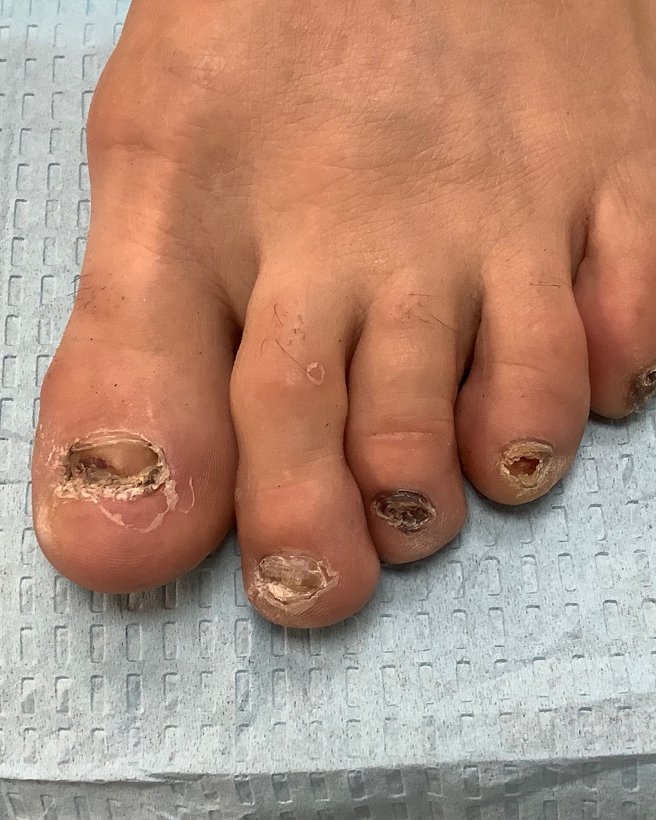
What Are Trauma Induced Nail Issues?
Trauma-induced nail disorders occur when an injury damages the nail plate, nail bed, or nail matrix. Injury to the nail matrix can result in permanent nail damage. Trauma may result from a single injury, such as dropping a heavy object on a toe or finger, or from repetitive microtrauma caused by running, hiking, skiing, tennis, dancing, or wearing tight-fitting shoes. Trauma can lead to bruising beneath the nail (subungual hematoma), nail separation (onycholysis), thickened or distorted nails, chronic pain, retronychia, or permanent changes in nail growth. Both fingernails and toenails may be affected, although sports-related injuries most commonly involve the toenails.
What Causes Nail Dystrophy?
Trauma can result from either a single significant injury or repeated minor injuries over time. Repeated trauma may also increase the risk of secondary fungal infection or retronychia, making expert evaluation particularly important when symptoms persist.
Common causes include:
Running, hiking, tennis, soccer, skiing, and other sports
Tight-fitting shoes or repetitive pressure on the toes
Stubbing the toe or dropping an object on the nail
Repetitive friction during exercise
Finger injuries from tools or occupational activities
Nail biting or picking
Aggressive manicures or pedicures
Previous nail surgery or procedures
Common Signs of Sports Related Nail Injury
If you’ve experienced an injury or participate in activities that repeatedly stress your nails, an evaluation may be warranted if you have:
Pain in or around the nail
Black, purple, or dark discoloration beneath the nail
Thickened or distorted nails
Nails that are loose, partially detached or lifted from the nail bed (onycholysis)
Redness or swelling around the nail
A nail that has stopped growing normally
Recurrent toenail problems related to sports or exercise
Difficulty wearing shoes comfortably
How Dr. Stern Evaluates Nail Trauma Virtually
For both asynchronous e-visit and live video consults, Dr. Dana Stern will review your photos and intake forms, prior treatments and your current medications and health history. For asynchronous e-visits, you will receive a detailed treatment plan to share with your local healthcare provider, including recommendations for imaging, procedures, or additional evaluation when needed. During live video consultations, Dr. Stern can prescribe medications when appropriate, coordinate laboratory testing if appropriate, and recommend local procedures such as drainage of a painful hematoma, imaging, or nail avulsion when indicated.
Treatment for Sports Related Nail Injuries
Your individualized treatment strategy will depend on the type of injury, the portion of the nail unit involved, the duration of symptoms, and whether secondary complications have developed.
Possible treatment recommendations include:
Activity modification and footwear recommendations
Nail care guidance to protect the injured nail
Treatment of nail separation or secondary infection when present
Prescription medications when appropriate
Laboratory testing if fungal infection is suspected
Recommendations regarding drainage of a subungual hematoma
Referral for nail avulsion or other procedures when indicated
Coordination of local specialty care if needed
Guidance for ongoing foot and toenail care and monitoring regrowth over time
Address Nail Damage That Is Not Healing As Expected
If your nail has not improved despite previous treatments, Dr. Stern will carefully review your injury history, prior diagnoses, photographs, and treatment response to determine why.
Many traumatic nail disorders are mistaken for fungal infection, while others develop secondary fungal infection after the injury. In some cases, persistent pain is actually caused by retronychia or another structural nail disorder that requires a different treatment approach. Identifying the underlying cause is the key to restoring nail health.

About Dr. Stern
Dr. Dana Stern is a board-certified dermatologist with more than 20 years of experience treating nail disorders. Her practice is devoted exclusively to nail health, and she is a nationally recognized expert, published author, and frequent speaker on nail disease. Recognized by Castle Connolly and Super Doctors and regularly featured in the media, Dr. Stern provides convenient, expert care through her specialized virtual nail consultation practice.
Start Your Virtual Nail Consultation
If you’ve developed nail changes after a manicure, gel polish, acrylic nails, dip powder, press-on nails, or other cosmetic nail products, Dr. Stern can help identify the underlying cause and recommend the most appropriate treatment. Through a secure virtual consultation, you’ll receive an expert evaluation and a personalized plan to restore healthy nails and help prevent future damage.
New Patients
For patients who would like to begin care with Dr. Stern through a virtual nail consultation.
Current Patients
For established patients who need a follow up visit, medication review, treatment update, or ongoing nail care guidance.
Nail Trauma FAQ
-
Yes. In most cases, Dr. Dana Stern can diagnose trauma-induced nail disorders through a careful review of your medical history, high-quality photographs, the mechanism of injury, and the progression of your nail changes. If additional testing, imaging, or an in-person procedure is needed, she will recommend the appropriate next steps and coordinate care with your local provider.
-
A black or purple area after toenail injury is due to blood collecting under the nail (subungual hematoma). A dark nail can also be due to pigment and so expert evaluation is essential to rule out other potentially serious causes of nail discoloration.
-
Nail lifting (onycholysis) often occurs after injury if the attachment points of the nail plate to the bed are disrupted. Readhesion is possible with the right treatment protocol.
-
Sometimes but not always. It depends on the area of involvement.
-
Sometimes a slower growing nail appears to be “not growing” but is growing in a stunted capacity. When a nail ceases to grow it indicates that there has been damage to the nail matrix which may or may not be permanent.
-
Yes and that is an important reason to treat a damaged nail.
-
Yes. During a live video consultation, Dr. Stern can prescribe medications when appropriate and coordinate any necessary testing. If you choose an asynchronous e-visit, she will provide an individualized treatment plan, including recommended prescriptions and referrals, for your local healthcare provider.
-
One of the most common reasons treatment is unsuccessful is that the injury was not the true cause of the nail changes. Trauma, fungal infection, psoriasis, retronychia, and other nail disorders can appear very similar. Another common reason is that the nail simply has not had enough time to grow out, or the underlying source of repetitive trauma—such as footwear or athletic activity—has not been corrected. Many forms of nail trauma are unfortunately permanent and irreversible. If this is the case, Dr. Stern will let you know if she feels your nail is not treatable so that you don’t waste time and money pursuing treatments that won’t be effective.
-
Recovery depends on the severity and location of the injury. Fingernails generally require about 6 months to grow out completely, while toenails typically require 12 to 18 months. If the nail matrix was injured, recovery may take longer and, in some cases, permanent nail changes can occur.
-
Yes. Nail trauma can recur if the underlying cause such as repetitive sports-related injury, poorly fitting footwear, occupational activities, or repeated mechanical stress is not addressed. Identifying and modifying these contributing factors is an important part of preventing future nail damage.
-
Absolutely. Trauma is one of the most common causes of nail abnormalities, but it can closely resemble fungal infection, nail psoriasis, retronychia, tumors, and other nail disorders. Likewise, many patients assume their nail changes are due to an injury when another condition is actually responsible. A careful evaluation is essential to establish the correct diagnosis.
-
Not always. If your history and examination clearly indicate trauma, laboratory testing may not be necessary. However, if there is concern for a secondary fungal infection or another diagnosis, Dr. Stern may recommend PCR testing or other diagnostic studies including biopsy to guide treatment.
-
You will receive links to either your email or text that contain our demographic form, consent form, nail questionnaire and photo upload instructions. Our staff is always available to help should you have any questions or issues.