
Nail Treatment for Nail Separation
Nail separation (onycholysis) occurs when the nail plate lifts away from the underlying nail bed. Onycholysis has many potential causes including trauma, psoriasis, fungal infection, allergic reactions, medications, and underlying medical conditions and so accurate diagnosis is essential. Now you can get expert nail care from one of the only dermatologists in the country with an easy-to-access telehealth appointment.
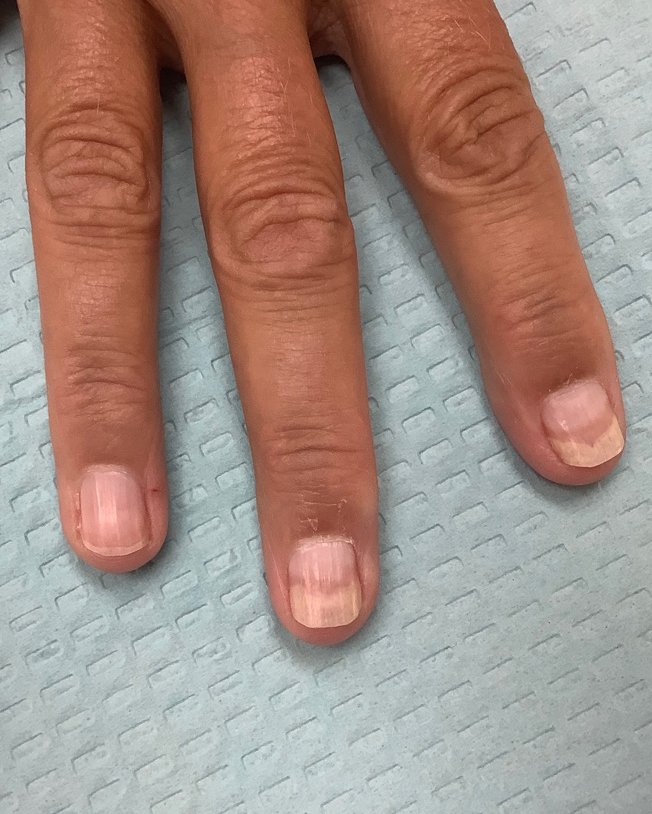
What Is Nail Separation?
Nail separation, known medically as onycholysis, occurs when the nail plate lifts away from the nail bed underneath. As the nail separates, the detached portion often appears white, yellow, or gray because it is no longer attached to the healthy tissue beneath. Onycholysis can affect both the fingernails and toenails and may involve part of the nail or, in some cases, nearly the entire nail.
Onycholysis is a sign that something is affecting the nail. Common causes include repetitive trauma, psoriasis, fungal infection (onychomycosis), allergic reactions to nail products, certain medications, and, less commonly, underlying medical conditions such as thyroid disease. Because treatment depends entirely on the underlying cause, an accurate diagnosis is essential.
What Causes Nail Separation?
Common causes of nail separation include:
Repetitive trauma or pressure, such as running, hiking, tight-fitting shoes, or frequent picking or cleaning beneath the nail
Aggressive manicuring
Nail psoriasis
Fungal infection (onychomycosis), particularly in toenails
Allergic reactions or irritation from nail cosmetics, gel manicures, acrylic nails, adhesives, or nail hardeners
Certain medications, including tetracycline antibiotics, chemotherapy agents, and other medications that can cause photosensitivity
Medical conditions such as thyroid disease and, less commonly, other systemic illnesses
Once a nail has separated, it creates a space beneath the nail where moisture, debris, yeast, bacteria, and fungi can accumulate. As a result, a secondary infection may develop even if it was not the original cause of the nail lifting. This is one reason why onycholysis should not be ignored.
Signs and Symptoms of Nail Separation
If you’re experiencing any of the following nail changes, an evaluation may be warranted.
Nail lifting or separation from the nail bed
A white, yellow, gray, or green area beneath the lifted portion of the nail
Progressive enlargement of the separated area
Debris or buildup under the nail
Pain, tenderness, or sensitivity
One or more nails becoming detached
Nail discoloration or thickening accompanying the separation
View Our Real Patients Results
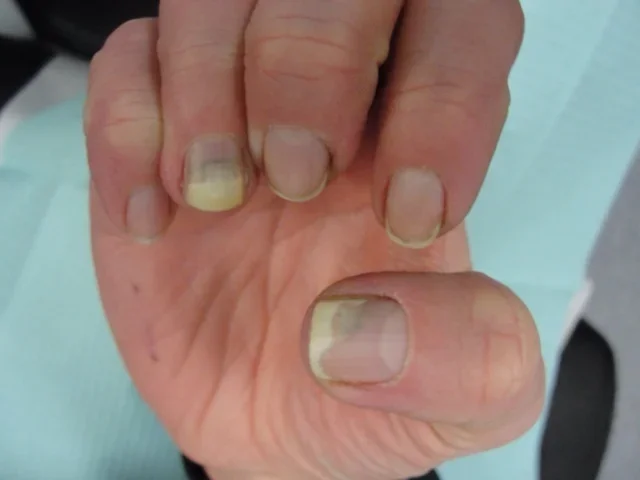
Pre-treatment
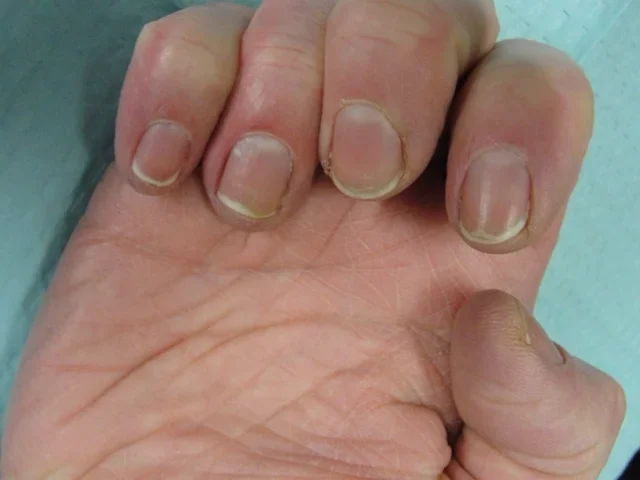
Post-treatment
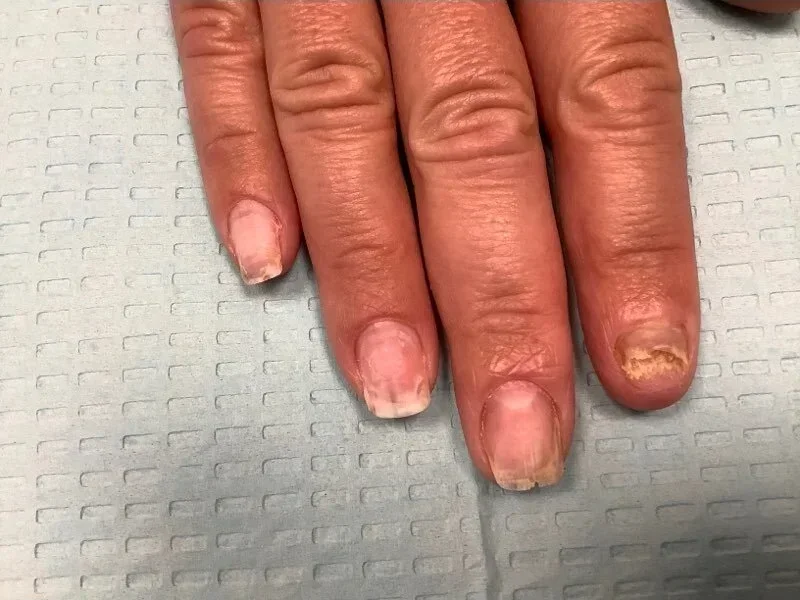
Pre-treatment
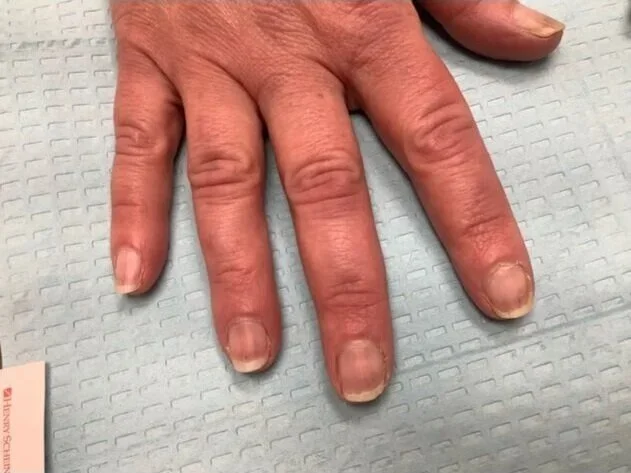
Post-treatment
How Dr. Stern Evaluates Nail Separation Virtually
For both asynchronous e-visit and live video consults, Dr. Stern will review your photos and intake forms, prior treatments and your current medications and health history. For asynchronous e-visits, you will be provided with a detailed plan to take to your local provider where Dr. Stern’s recommended testing and treatment will take place. For live video consults, Dr. Stern will be able to test your nails using PCR and to send labs and prescriptions as appropriate.
Nail Separation Treatment Options
Your individualized treatment strategy will depend on the cause of your nail separation, severity, number of nails involved, and your history.
Possible treatment approach:
Identifying and treating the underlying cause (such as trauma, psoriasis, fungal infection, or irritant contact dermatitis)
Diagnostic testing, including PCR fungal testing or other laboratory studies when indicated
Recommendations to minimize further nail trauma and promote healthy nail regrowth
Nail care guidance, including trimming, protection, and avoidance of behaviors that worsen separation
Treatment of secondary fungal or bacterial infection if present
Monitoring nail growth over time to assess recovery
Local care coordination for testing, prescriptions, or procedures when needed
Get Clear Answers For Persistent Nail Separation
If your nail bed separation has not improved despite over-the-counter treatments, or prescription medications, Dr. Stern will carefully review your history, prior testing, and previous treatments to determine why treatment failed and develop a personalized plan for what to do next.

About Dr. Stern
Dr. Dana Stern is a board-certified dermatologist with more than 20 years of experience treating nail disorders. Her practice is devoted exclusively to nail health, and she is a nationally recognized expert, published author, and frequent speaker on nail disease. Recognized by Castle Connolly and Super Doctors and regularly featured in the media, Dr. Stern provides convenient, expert care through her specialized virtual nail consultation practice.
Start Your Virtual Nail Consultation
If you’re experiencing nail separation (onycholysis), Dr. Stern can help determine the underlying cause and develop a personalized treatment plan. Through a secure virtual consultation, you’ll receive an expert evaluation focused on identifying why your nail has lifted, promoting healthy nail regrowth, and helping prevent the problem from recurring.
New Patients
For patients who would like to begin care with Dr. Stern through a virtual nail consultation.
Current Patients
For established patients who need a follow up visit, medication review, treatment update, or ongoing nail care guidance.
Nail Separation FAQ
-
Yes! Through either a live-video consult, or if you choose to do an asynchronous e-visit, Dr. Stern will provide you with an individualized treatment plan to take to your local provider.
-
Yes! Through a live-video consult, Dr. Stern will be able to provide prescriptions as needed. If you choose to do an asynchronous e-visit, Dr. Stern will provide you with an individualized treatment plan including recommended prescriptions, to take to your local provider.
-
Yes, in cases that are not due to underlying disease of the nail, Dr. Stern has a 99% cure rate for this condition.
-
No. Most cases are not due to fungus.
-
One of the most common reasons is that the underlying cause was never correctly identified or the treatment regimen was not ideal.
-
It depends on the extent of separation. For example, for fingernails that have 50% separation, treatment will generally take 3 months
-
Even after successful treatment, nail separation can come back. This is why Dr. Stern emphasizes understanding the cause as this reduces the risk for recurrence.
-
Yes. Nail separation (onycholysis) is often mistaken for a fungal nail infection. While fungus can cause the nail to lift, so can trauma, nail psoriasis, allergic reactions to nail products, certain medications, and underlying medical conditions.
-
Usually not but if Dr. Stern feels testing is warranted, she will recommend that the nails be tested using PCR so that she can determine the exact type of fungus causing the issue in order to most effectively target therapy.
-
You will receive links to either your email or text that contain our demographic form, consent form, nail questionnaire and photo upload instructions. Our staff is always available to help should you have any questions or issues.