Should You Clip Or File Your Nails? A Nail Doctor Explains
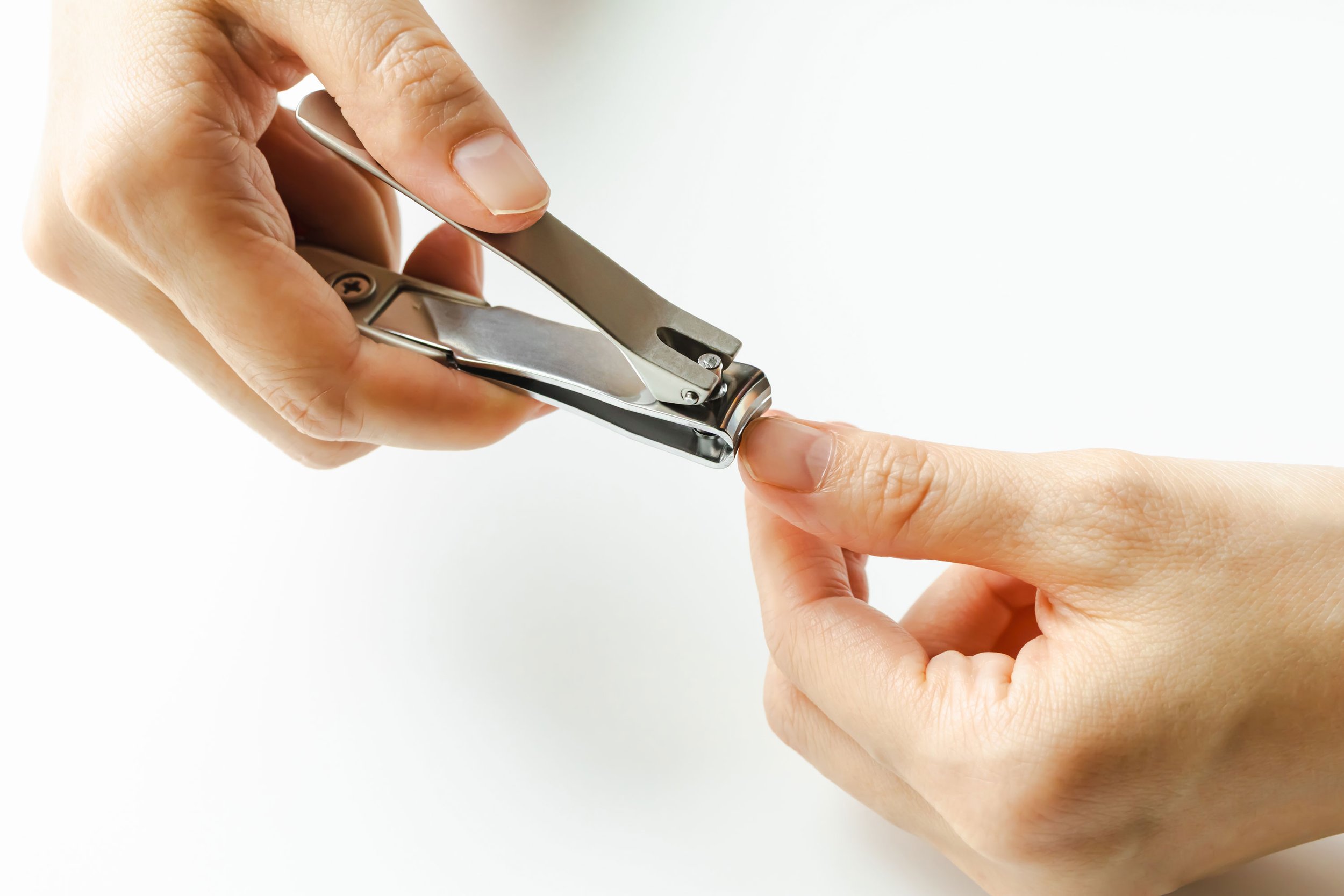
One of the questions I’m asked surprisingly often is whether it’s better to clip your nails or file them. The answer isn’t as simple as choosing one over the other. In reality, both nail clippers and nail files have an important place in a healthy nail care routine and it simply depends on what you’re trying to accomplish.
When Should You Clip Your Nails?
Think of nail clippers as your tool for removing length. If your nails have become too long, clipping is the quickest and safest way to shorten them. Trying to file away a significant amount of nail can be time-consuming and often requires more back-and-forth friction than necessary. That said, how you clip matters.
Rather than taking one large bite out of the nail, trim small sections across the free edge. This places less stress on the nail plate and reduces the risk of splitting or cracking. If your nails are particularly brittle, it’s often helpful to clip them shortly after bathing or showering, when they are slightly more flexible. Importantly, when toenails are prone to become ingrown, clip straight across, not on a curve, to prevent embedding (onychocryptosis).
How Should You Cut Brittle or Peeling Nails?
Brittle nails that are weak, peeling (onychoschizia) or gel damaged nails, and nails that are prone to cracking require special care. Reduce length using a high quality clipper with a sharp edge. Old clippers are often dull and can cause weak nails to break and split. Use a glass file to smooth nail edges and to seal in keratin. Glass files in contrast to traditional cardboard emery boards create a perfectly smooth edge that will be less prone to peeling splits and breakage.
What is the Safest Way to Clip Children’s Nails?
Many parents ask when children can safely begin clipping their own nails. While every child develops at a different pace, around age 9 is generally a reasonable age for many children to begin learning this skill with adult supervision.
Teaching proper nail care early helps establish healthy habits that can last a lifetime. Encourage children to trim their nails carefully, taking small clips across the free edge rather than trying to remove too much at once. Younger children should always have an adult trim their nails or closely supervise the process.
One of the best times to clip nails—for both children and adults—is after a bath or shower. The nail plate absorbs approximately 1,000 times more water than the skin, making nails temporarily softer and more flexible. This allows the clippers to glide through the nail more easily and can reduce the risk of cracking or splintering while trimming.
When Should You File Your Nails?
A nail file serves a different purpose. Filing is best for refining the shape of the nail, smoothing rough edges, and preventing tiny imperfections from becoming larger cracks or splits. Even after clipping, I almost always recommend finishing with a nail file to create a smooth, even edge. If you only need to remove a small amount of length, filing alone is often sufficient. It’s also the preferred option when you’re making minor adjustments or maintaining the shape between trims.
Not All Nail Files Are Created Equal
The type of nail file you use makes a significant difference. Traditional cardboard emery boards are inexpensive and widely used in salons, but they can be surprisingly harsh on natural nails. Their rough surface creates microscopic tears and openings along the free edge of the nail. These tiny defects become weak points where peeling (onychoschizia), splitting, and breakage often begin.
For patients with brittle, peeling, or weak nails, I almost always recommend switching to a glass nail file. A quality glass file gently seals and smooths the nail edge rather than shredding it. This creates a cleaner finish that helps make nails more resistant to splitting and peeling. It also allows for more precise shaping and produces a smoother edge that is less likely to snag on clothing or hair.
However, not all glass files are created equal. Some are manufactured with an abrasive surface that can still damage natural nails. A well-designed glass file should glide smoothly across the nail while creating a precise, clean edge without causing microscopic trauma.
How to Combine Nail Clipping and Filing
Healthy nail care isn’t about choosing between clipping and filing but knowing when to use each. Use nail clippers when you need to remove significant length. Use a glass nail file to refine the shape, smooth the edge, and help prevent microscopic damage that can lead to peeling, splitting, and breakage. This simple two-step approach is especially important if you have brittle nails, weak nails, or nails recovering from gel manicures.
A few extra moments spent filing after clipping can make a remarkable difference in the long-term health and appearance of your nails. Sometimes the simplest habits are the ones that make the biggest difference.
How Nail Clipping and Filing Support Healthier Nails
Using the right tools can make a tremendous difference for the health of your nails. If you are concerned about an issue with your nails or feel like you need expert input, an easy-to-access telehealth consult with Dr. Stern is your next step.