Weak Nails, Brittle Nails, and Peeling Nails: Understanding the Difference and How to Restore Healthy Nails
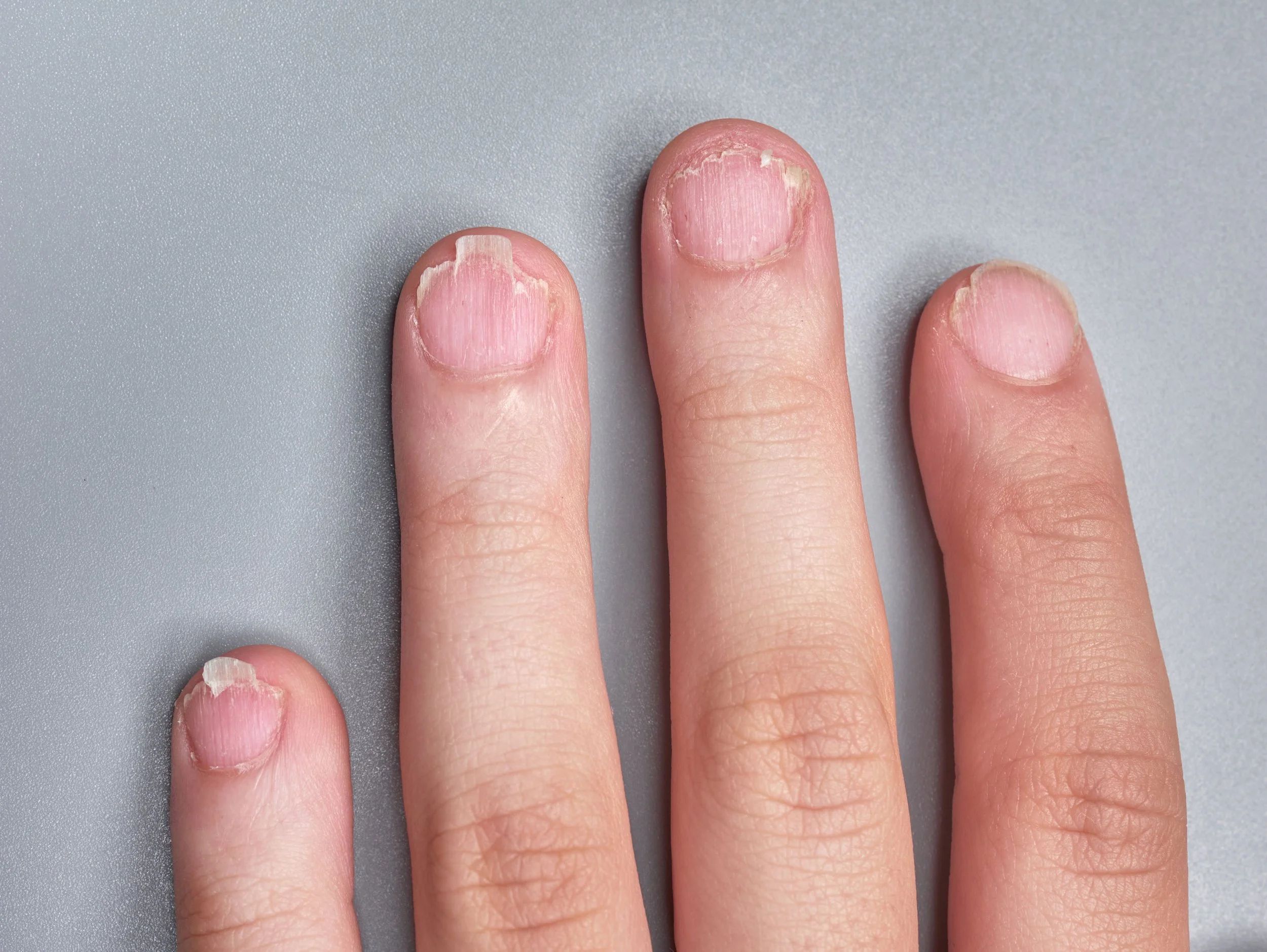
If you’ve ever described your nails as weak, brittle, or peeling, you’re not alone. These terms are often used interchangeably, but they actually describe different problems affecting the nail plate. Understanding the difference is the first step toward choosing the right treatment and preventing further damage.
As a board-certified dermatologist specializing exclusively in nail disorders, one of the most common questions I hear is, “Why are my nails so weak?” The answer often depends on what is actually happening to the nail.
Why Are My Nails Weak, Brittle, or Peeling?
Weak Nails
Weak nails are typically thin, soft, and flexible. They bend easily and may even feel “paper thin.” Rather than breaking from dryness, they lack structural integrity. Weak nails commonly develop after repeated trauma to the nail plate, including excessive buffing during manicures, aggressive gel or dip powder removal, chronic acetone exposure, or mechanical injury. Genetics can also play a role. You are born with your nail matrix (that small half moon that is usually most visible on the thumb nail) and the matrix is what determines nail size and quality to a large degree.
Treatment focuses on allowing the nail to recover while preventing additional thinning. Avoid unnecessary buffing and aggressive filing, minimize acetone and chemical exposure whenever possible, keep nails relatively short while they recover, and use scientifically validated treatments designed to support the nail plate rather than simply coating it.
Brittle Nails
Brittle nails are a distinct medical condition known as onychorrhexis and onychoschizia. Onychorrhexis refers to longitudinal ridging which often results in splitting, while onychoschizia describes peeling or layering at the free edge of the nail.
Unlike weak nails, brittle nails are usually caused by changes in the structure of the nail plate. Aging is one of the strongest risk factors. Research has shown that women experience an age-related decline in cholesterol sulfate within the nail plate, particularly after menopause. This change likely contributes to the higher prevalence of brittle nails in women compared with men.
Other common contributors include:
Frequent hand washing
Repeated exposure to detergents and cleaning chemicals
Nail polish removers
Over-thinning of the nail plate from manicures
Genetics
Certain medical conditions
Fortunately, there are several ways to reduce brittleness.
Avoid peeling or picking off nail polish, which strips away layers of the nail plate. Limit exposure to nail polish remover whenever possible, and when you do remove polish, choose an acetone-free formula if appropriate, as it is generally less dehydrating than acetone.
Wear gloves whenever performing prolonged wet work or cleaning. Many people are surprised to learn that the nail plate absorbs approximately 1,000 times more water than the skin. Repeated swelling and shrinking of nail cells places tremendous stress on the nail plate and contributes to peeling, splitting, and breakage.
Regular cardiovascular exercise also plays an important role in nail health. Nails receive oxygen and nutrients through the bloodstream, making healthy circulation important for maintaining strong nails.
Finally, use products supported by scientific evidence rather than relying on traditional nail hardeners.
How Long Do Damaged Nails Take to Recover?
Gel manicures themselves are not inherently harmful. Most of the damage occurs during preparation and removal. The process often involves roughening the surface of the nail before application, repeated acetone soaking, scraping softened gel from the nail plate, and sometimes peeling away remaining product. Repeating this cycle over months or years gradually thins the nail. Fortunately, nail damage is not usually permanent. Fingernails grow approximately 3 millimeters each month, and complete replacement of the fingernail generally takes four to six months. If the nail has been significantly thinned, the damaged portion must simply grow out. During this period, protecting the nail from further trauma and maintaining hydration are essential.
How Can You Strengthen Brittle and Peeling Nails?
Not all nail treatments are created equal. Many traditional nail “hardeners” actually make nails excessively rigid. While this may initially make nails feel stronger, overly rigid nails are more likely to crack and split. Products containing formaldehyde are particularly problematic because they excessively harden the nail and can ultimately worsen brittleness. A good rule of thumb is this: if a product must be removed with nail polish remover, it is functioning more like a cosmetic coating than a true treatment. Instead, look for products formulated with scientifically supported ingredients that improve the health of the nail itself.
Can Glycolic Acid Help Dry, Rough Nails?
One of the most exciting advances in nail care has been the use of glycolic acid for nail rejuvenation. Research has demonstrated that controlled keratolysis using glycolic acid improves dry, rough nails by gently breaking down disulfide bonds within nail keratin. This allows the nail plate to better absorb and retain moisture. Glycolic acid also functions as a humectant, helping the nail maintain hydration. In many ways, this approach treats the nail much like a facial treats the skin—gently exfoliating to improve texture, hydration, and overall appearance.
Which Plant Based Ingredients May Support Nail Strength?
Another promising ingredient is Pistacia lentiscus (mastic oil), a natural botanical resin that has been shown to stimulate the production of hard keratins and keratin-associated proteins responsible for nail strength. Clinical studies have demonstrated improvements in nail thickness, strength, and overall appearance with consistent use.
Dr. Stern’s Published Research on Brittle Nails
In 2007, Dr. Stern published a ground breaking study entitled “Water Content And Other Aspects of Brittle Versus Normal Fingernails.” This study was published as a cover feature in the premier dermatology journal, The Journal of The American Academy of Dermatology. Dr. Stern and her team discovered that water content of brittle nails was contrary to popular belief at that time, not what determines brittleness. Then in 2009 another nail team led by Dr. Robert Baran in France further corroborated these findings in their study, “Nail Plate Cohesion Seems To Be Water Independent.”
Don’t Forget Your Nail File
The tool you file your nails with matters more than many people realize. Traditional cardboard emery boards, while inexpensive and commonly used in salons, create microscopic tears along the free edge of the nail. These tiny defects become starting points for peeling and splitting. A high-quality glass or crystal file creates a much cleaner edge, reducing the risk of microscopic damage. Not all glass files are created equally, however. Some are overly abrasive.
Can Weak or Brittle Nails Be a Sign of a Health Problem?
In most cases, weak or brittle nails are not dangerous and do not increase the risk of serious disease. However, they can certainly affect comfort and daily function. Nails that split or crack easily can become painful, catch on clothing, and interfere with everyday activities.
When splitting extends into the cuticle or surrounding skin, openings may develop that increase the risk of bacterial infection. Protecting damaged nails and restoring the integrity of the nail plate can help prevent these complications.
Why Do Gel Manicures Sometimes Damage Nails?
Contrary to popular belief, the gel polish itself is rarely the problem.
Instead, damage usually results from the manicure process:
Roughening the nail surface before application
Prolonged acetone soaking during removal
Scraping or prying off the softened gel
Repeating this cycle over and over, leading to cumulative thinning
The good news is that this type of damage is preventable. Gentle application and careful removal techniques, combined with periods of recovery and scientifically supported nail treatments, can allow nails to regain their natural strength over time.
Healthy nails are not achieved by making them harder—they are achieved by improving the health of the nail plate itself. With the right approach, even nails that have become thin, brittle, or damaged can recover and once again become smooth, strong, and resilient.
Get Expert Guidance from Nail Doctor Dana Stern, MD
Brittle, weak nails affect 1 in 5 people and understanding the cause and effective treatment strategies often requires guidance from a nail expert. If you have been suffering with weak, peeling, splitting, over-processed nails and over-the-counter or prescription treatments have not helped, it is time to see a nail doctor for expert input. Booking an easy-to-access telehealth consult with Dr. Stern is your next step.