When Should You See a Dermatologist for a Black Line in Your Nail?
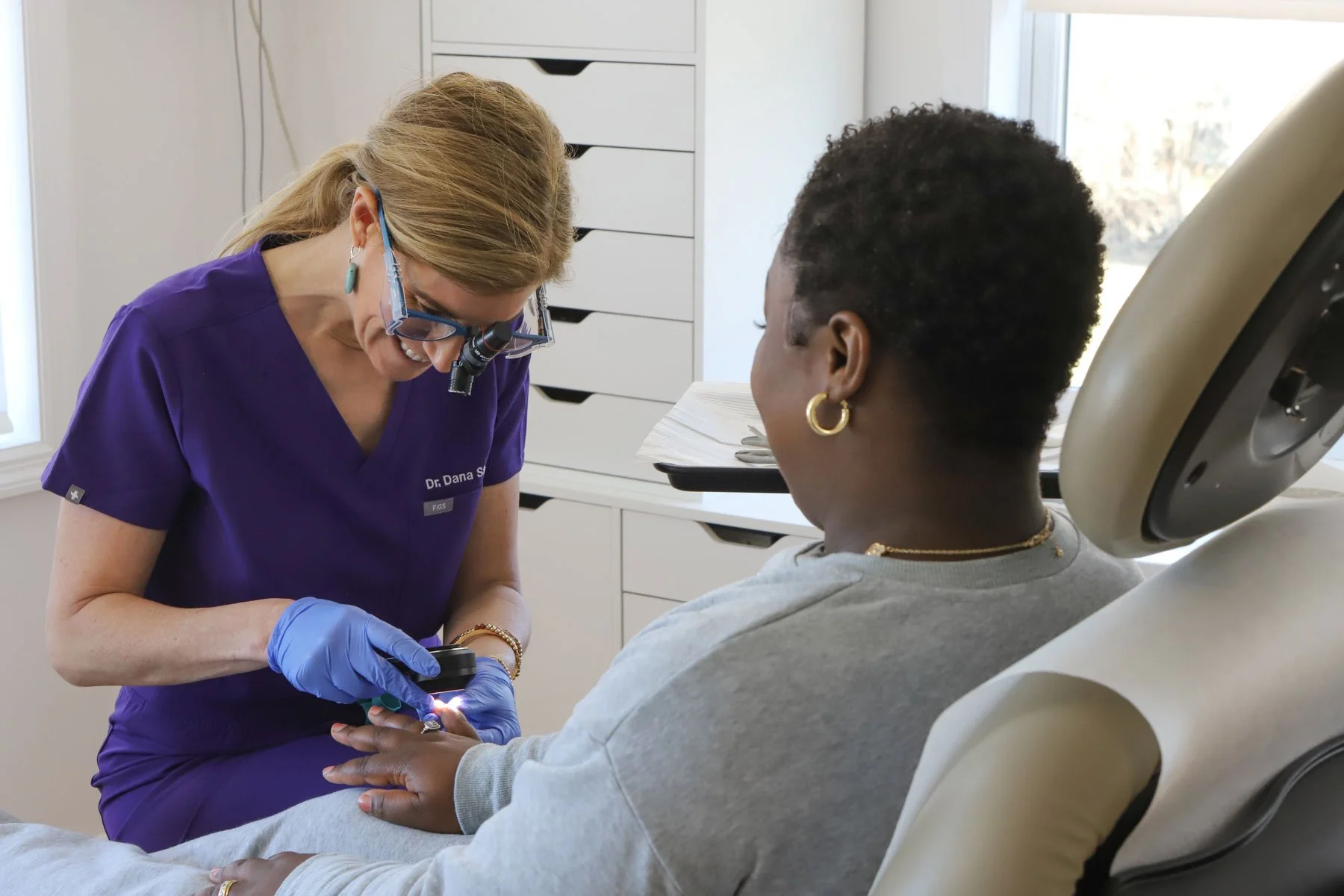
A black or brown line in the nail can be alarming, but it does not automatically mean you have melanoma. While most pigmented nail bands are harmless, some may represent nail melanoma, a rare but potentially life-threatening form of cancer. Because early nail melanoma can closely resemble benign conditions, it is important to have any concerning nail pigmentation evaluated by a dermatologist with expertise in nail disorders. Early diagnosis is critical. When detected early, nail melanoma is highly treatable, but unfortunately it is often diagnosed at a later stage because its early appearance can be subtle.
What Causes a Black or Brown Line in the Nail?
A black or brown line that runs from the cuticle to the tip of the nail is called longitudinal melanonychia. This pigmentation develops when melanocytes—the pigment-producing cells in the nail matrix—produce melanin. There are several possible causes, including:
Benign activation of pigment cells
A mole (melanocytic nevus) within the nail matrix
Trauma to the nail
Certain medications
Inflammatory nail disorders
Hormonal shifts
Nail melanoma
Determining the cause requires a careful examination because many of these conditions appear very similar.
Is a Black Line in the Nail Always Melanoma?
No. In fact, most black or brown nail bands are not melanoma. Pigmented bands are especially common in individuals with darker skin tones, who naturally have more active pigment-producing cells within the nail matrix. These individuals often develop multiple pigmented bands over time, which are usually completely benign. Even a single pigmented band is more likely to represent a benign mole or harmless activation of pigment cells than melanoma. However, because early melanoma can look nearly identical to these benign conditions, any new or changing pigmented band should be evaluated by a dermatologist.
What Does Nail Melanoma Look Like?
Nail melanoma most often appears as a single brown or black vertical band involving one nail. Features that may be seen include:
A dark brown or black band
A band that gradually widens over time
Irregular borders or uneven color
Pigment extending onto the surrounding skin (known as Hutchinson’s sign)
Distortion or splitting of the nail
A band involving only one nail
The thumb, index finger, and great toenail are considered high risk digits. Because these findings are not always present in early melanoma, even subtle changes deserve evaluation.
It is important to note that pigmented bands in the pediatric population tend to look very different than in adults. Children tend to have pigmented bands that are due to a mole which is a cluster of growing cells called melanocytes. These bands tend to look a lot more ominous in kids. Pediatric pigmented bands are almost never worrisome but they still require monitoring by a nail doctor.
Which Changes in a Nail Band Are Concerning?
While many pigmented bands are harmless, certain changes warrant prompt medical evaluation. You should see a dermatologist if you notice:
A new pigmented band developing in adulthood
A single dark band affecting one nail
A band becoming wider or darker
Irregular or blurry borders
Multiple shades of brown or black within the band
Pigment spreading onto the surrounding skin
Nail splitting, distortion, or destruction
Bleeding or persistent pain
These findings do not necessarily mean melanoma is present, but they should never be ignored.
Can Nail Trauma Cause a Dark Line?
Yes. Trauma is one of the most common causes of benign nail pigmentation. The pigment-producing cells responsible for nail color are located within the nail matrix, just beneath the cuticle. When this area is repeatedly irritated, the melanocytes may become activated and begin producing pigment. Common sources of trauma include:
Aggressive cuticle pushing
Cutting or trimming the cuticle
Nail biting
Picking at the cuticle
Repetitive friction or injury
This stimulation can result in a brown longitudinal band that is completely benign referred to as benign melanocytic activation.
Can a Virtual Consultation Diagnose a Black Line in the Nail?
No. A virtual consultation cannot always determine if a pigmented nail band requires a nail biopsy. However, high-quality photographs combined with a detailed history allow an experienced nail dermatologist to determine whether the pigmentation appears reassuring or whether additional testing or an in-person examination is needed. If a biopsy is recommended, Dr. Stern can coordinate care with a qualified local dermatologist or podiatrist experienced in nail surgery.
When Is a Nail Biopsy Needed?
A nail biopsy is recommended when melanoma or another serious nail disorder cannot be ruled out through examination alone.
A biopsy may be indicated when:
The diagnosis remains uncertain
The pigmented band has concerning features
The band continues to change over time
Pigment extends onto the surrounding skin
Nail melanoma is suspected
Because the nail unit has a complex anatomy, nail biopsies should always be performed by a dermatologist or podiatrist experienced in nail surgery. Proper technique is essential to obtain an accurate diagnosis while minimizing the risk of permanent nail damage. Equally important is having the tissue evaluated by a dermatopathologist with expertise in nail disease whenever possible.
Do UV Nail Lamps Increase the Risk of Nail Cancer?
This is a common concern, but current evidence suggests that UV nail lamps are not a significant cause of nail melanoma. Nail melanoma is considered an acral lentiginous melanoma, a subtype that occurs on the nails, palms, and soles. Unlike many other forms of melanoma, it has historically been thought to be unrelated to UV exposure and more likely associated with a complex interaction between genetics and trauma.
Dr. Dana Stern co-authored a study evaluating UV penetration through the nail plate. The research demonstrated that:
The nail plate completely blocked UV-B radiation.
Only about 1.6% of UV-A radiation penetrated the nail plate.
These findings suggest that the nail plate functions as an effective natural barrier against UV light. Currently, there are no recommendations to apply sunscreen directly to the nails to prevent nail melanoma. However, UV lamps used during gel manicures can contribute to skin photoaging, including wrinkles, brown spots, and collagen breakdown on the hands and if exposure is repetitive, can pose a risk for skin cancer. For this reason, applying sunscreen to the hands or wearing fingertipless UV-protective gloves before gel manicures is recommended.
When Should You See a Dermatologist for a Black Line in Your Nail?
You should schedule an evaluation if you develop:
A new brown or black band on one nail
A band that becomes darker or wider
Pigment extending onto the surrounding skin
Nail distortion or splitting
Persistent uncertainty about the cause of a pigmented nail band
In addition, remove nail polish from both your fingernails and toenails before every annual skin examination so your dermatologist can carefully inspect your nails.
Everyone—including people with darker skin tones—should receive routine skin examinations by a board-certified dermatologist. Although pigmented nail bands are more common in darker complexions, melanoma can occur in anyone, and when melanoma develops in individuals with darker skin, it more commonly occurs on the nails, palms, and soles rather than sun-exposed skin.
Get Answers About a Black Line in Your Nail from Dr. Dana Stern
Most black or brown lines in the nail are benign, but distinguishing harmless pigmentation from nail melanoma requires expertise. Because early melanoma often looks remarkably similar to benign nail bands, timely evaluation is essential.
Through a comprehensive virtual nail consultation, Dr. Dana Stern can evaluate your nail, review your history, determine whether additional testing or a biopsy is necessary, and coordinate care with a local specialist when appropriate. If you have noticed a new or changing black line in your nail, don’t wait—early diagnosis can make all the difference.